Nigeria Unveils $60 Billion High-Speed Rail and Gas Mega Project
By iNewsAfrica Staff Writer | August 16, 2025
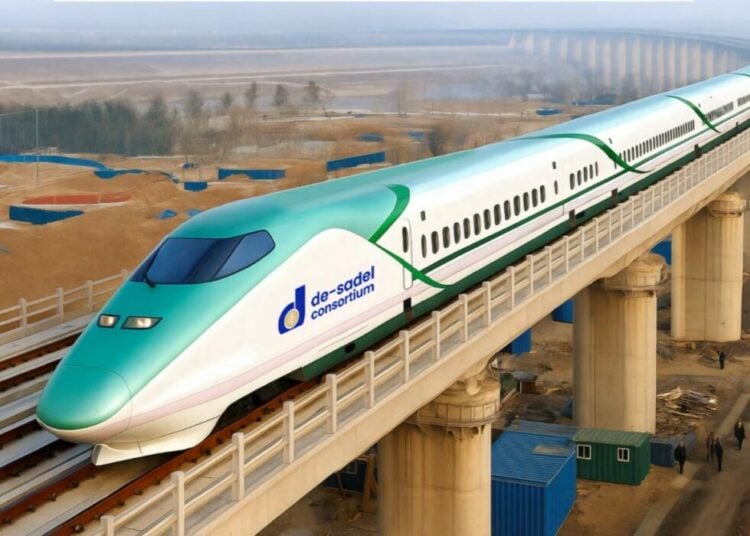
Abuja, Nigeria — Nigeria is set to embark on one of the most ambitious infrastructure projects in Africa’s history, a $60 billion high-speed rail and gas infrastructure initiative designed to transform the nation’s transportation and energy landscape.
The project, led by De-Sadel Nigeria Limited in partnership with China Liancai Petroleum Investment Holdings and financed by the Asian Development Investment Bank, will deliver a 4,000-kilometre bullet train network connecting major cities including Lagos, Abuja, Kano, and Port Harcourt.
Faster, Greener, Stronger
The first phase, covering about 1,600 kilometres, is budgeted at $55 billion with a completion target of just three years. Once operational, travel time between Lagos and Abuja could be cut to under three hours, reshaping business, trade, and tourism.
Crucially, the rail system will be paired with a gas distribution network, drawing from Nigeria’s massive reserves of over 210 trillion cubic feet of natural gas. Officials say this dual approach will ensure energy reliability, reduce dependence on the fragile national grid, and attract billions in foreign investment.
Approvals and Economic Impact
Government agencies have already approved nearly 90 percent of the required processes, including the outline business case and proof of funds. Environmental clearances and land acquisition negotiations are expected to follow, with groundbreaking targeted within the next year.
Analysts predict the project could create thousands of jobs, ease freight congestion, and slash carbon emissions, while serving as a flagship of Nigeria’s drive toward modern, sustainable infrastructure.
“This is more than a rail line,” said one government source. “It is a national economic artery that will fuel growth for generations.”
A New Chapter for African Connectivity
If completed as planned, Nigeria’s high-speed rail will rival the modern transport systems of Morocco and Egypt, establishing West Africa’s largest transport corridor and setting a new benchmark for continental integration.
For Nigeria, long plagued by inadequate transport and energy systems, this mega project signals not just a construction plan — but the dawn of a new era in connectivity, mobility, and economic resilience.


Leave a reply


Email: [email protected]