Africa and Governance: Why a Continent of Promise Still Struggles to Govern Its People
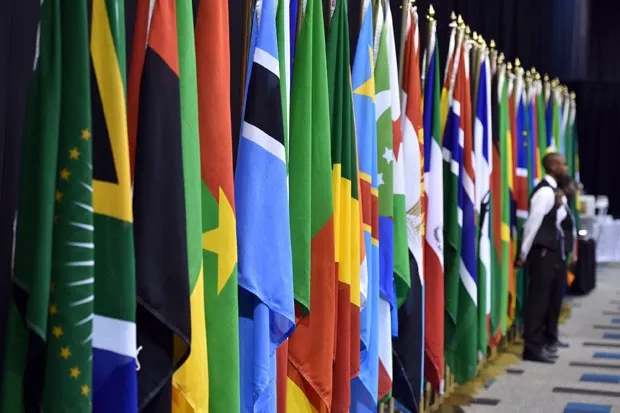
Africa Union (AU) Flags
By Dr. Michael O. Omoruyi, iNewsAfrica Op-Ed Columnist
Africa is a continent of astonishing potential—rich in natural resources, cultural diversity, human talent, and youthful energy. Yet the paradox that has shadowed the African story for more than six decades is this: Why does a continent so gifted struggle so profoundly with governance? Why do many African countries find it difficult to govern effectively, deliver development, protect citizens, and uphold democratic norms?
The answer is not simple. It is layered, historical, political, cultural, and economic. But it is a conversation Africa must confront boldly if it hopes to break the cycles of instability that continue to undermine its progress.
The Colonial Aftershock: A Foundation Built on Fragility
Modern African states were never designed to succeed. Colonial borders chopped ethnic nations apart, lumped rival groups together, and imposed foreign systems of governance that had little relevance to indigenous political cultures.
Independence in the 1950s and 60s created countries overnight—without foundational institutions, administrative capacity, or unified national identities. Many African leaders inherited states that existed only on paper, not in the hearts of the people.
Decades later, the effects linger:
-
Fragile national cohesion
-
Weak state institutions
-
Disputed legitimacy of governments
-
The constant temptation of military intervention
These colonial fractures still shape political tensions across the continent today.
Leadership Without Accountability
Africa does not lack brilliant minds or capable leaders. It lacks systems that hold leaders accountable.
A governance culture has taken root in many countries where:
-
Power is personalized
-
Institutions are undermined or politicized
-
Elections are manipulated
-
Corruption is tolerated
-
The military becomes the referee during political crises
When institutions are weak, leaders rule as owners, not as custodians. Public office becomes a gateway to wealth, not service. And citizens, deprived of accountability mechanisms, become spectators in their own political destinies.
Ethnic Politics: Loyalty Over Competence
Many African nations remain deeply influenced by ethnic identity, and political elites exploit this reality expertly.
Instead of building inclusive leadership cultures where competence drives governance, ethnic patronage becomes the currency of power. Policies are shaped by who supported the ruling group, not by what benefits the country.
This fuels:
-
Exclusion
-
Distrust
-
Perceptions of marginalization
-
Cycles of political revenge after elections
Governance becomes a chessboard of group interests instead of a platform for national development.
Poverty, Insecurity, and a Distracted State
A state that is busy fighting for survival has little time to govern effectively. Across Africa:
-
Poverty drives criminality
-
Criminality triggers insecurity
-
Insecurity overwhelms state capacity
From the Sahel to the Horn of Africa, governments spend more time fighting insurgencies, rebellions, and economic crises than pursuing development. Many administrations are reactive, not visionary—constantly managing emergencies instead of planning for the future.
Foreign Influence: When Sovereignty Becomes a Bargaining Chip
African governance is also shaped—sometimes warped—by foreign actors:
-
Powerful nations seeking influence
-
Multinational corporations exploiting resources
-
Loans that compromise sovereignty
-
Security partnerships that reshape local politics
When external powers dictate national priorities, domestic governance becomes secondary. Leaders become more interested in pleasing foreign benefactors than serving their people.
A Youth Population Shut Out of Power
Africa is the youngest continent in the world, yet it is ruled by some of the oldest political elites.
Young Africans are:
-
The most educated generation in African history
-
The most digitally connected
-
The most globally exposed
Yet their energy and creativity remain largely excluded from governance. This disconnect fuels frustration, migration, and political apathy.
Africa cannot rise while ignoring its greatest asset.
But There Is Hope—A New African Mindset Is Emerging
Despite the challenges, Africa is changing.
Across the continent:
-
Young reformers are rising
-
Civil society is gaining power
-
Technology is driving transparency
-
A new generation is rejecting old politics
-
Citizens are demanding better governance
These trends signal a governance awakening. Africa’s story is not doomed; it is in transition.
If African nations can strengthen institutions, reject ethnic politics, embrace accountability, empower youth, and reduce external dependency, the continent can transform itself within a generation.
Africa does not lack capacity. It lacks the political courage to unlock it.
Governance Must Become Africa’s New Independence Struggle
The real battle for Africa today is not against colonialism—it is against internal dysfunction, weak institutions, and a leadership culture that fears accountability.
Africa’s future depends on its ability to govern itself with integrity, innovation, and unity.
As Africans, we must ask: If we do not build the Africa we want, who will?
The answer, as always, lies with us.
Dr. Michael O. Omoruyi is an author, IT professional, and socio-political commentator. He writes regularly for iNewsAfrica on governance, technology, and the future of the African continent.
Follow iNewsAfrica channel on WhatsApp:
https://whatsapp.com/channel/0029VbAPrqI96H4JXXQrKP1V



Leave a reply


Email: [email protected]