Recycled Power: How the Same Political Actors Continue to Ruin Nigeria While the Masses Sing the Same Song
By Dr. Michael Omoruyi, for iNewsAfrica
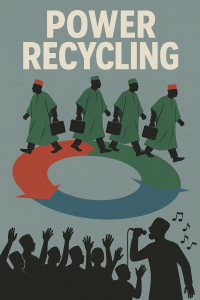
Nigeria’s political landscape has become a carousel of familiar faces in unfamiliar uniforms. Politicians once branded under the red, green, or blue of one party today wear the colors of another, only to return later in the same cycle. Decades after independence, Nigeria’s political class seems more like a fraternity of survivalists than a coalition of public servants. The tragedy? The people clap, chant, and cheer them on — as though change is happening.
Decamping: A Political Survival Strategy, Not an Ideological Shift
Party-switching — popularly called “decamping” — has become the primary career strategy for Nigerian politicians. When they lose favor in one party or face internal accountability, they migrate to a new party, often one in power, and reinvent themselves as reformers or patriots. Their loyalty isn’t to party manifestos or national vision, but to personal ambition and political immunity.
What should be seen as a betrayal of trust is normalized. The electorate watches silently — or worse, supports them — forgetting past records and enabling the cycle of corruption, poor governance, and betrayal to repeat.
Gang-ups and Coalition Politics: Same Wine, New Bottles
Ahead of every election cycle, political alliances are formed — not around shared vision or developmental goals — but around access to power. Former opponents become allies, previous betrayers become brothers, and enemies unite “for the sake of the nation.” These alliances, often celebrated as “unity moves,” are nothing more than opportunistic mergers of interests.
The result? Each successive government inherits the same political DNA. Whether it’s PDP, APC, LP, or any other acronym, the underlying actors remain the same. It’s not governance that changes — it’s just the logo on the campaign posters.
An Entrenched Political Class With No Exit Plan
Unlike advanced democracies where fresh faces emerge through transparent systems, Nigeria’s political class is more of a permanent club. Many have been in the corridors of power since the 1980s, morphing from military appointees to democratic senators, governors, and party leaders. Their wealth, networks, and ability to manipulate electoral institutions ensure they are never truly out of power — just repositioned.
The People’s Role: From Victims to Enablers
Why does this continue? Because the people — often disillusioned, impoverished, or misinformed — have been conditioned to accept mediocrity and recycle failure. Tribalism, religion, and regional sentiments are weaponized to distract from poor performance. Instead of holding leaders accountable, voters often defend “their own” no matter how incompetent, corrupt, or disconnected from national priorities.
Sadly, Nigerians have perfected the art of complaining without consequence. Radio rants, social media outrage, and late-night debates rarely translate to political change at the ballot box. Protest is replaced by prayer; anger is subdued by apathy.
A Way Forward: From Political Illusion to Civic Awakening
To break the cycle:
Civic education must be prioritized: Citizens need to understand that democracy is not just voting every four years, but demanding accountability every day.
Independent candidates and youth inclusion should be actively encouraged and protected through electoral reform.
Media and civil society must stop normalizing defection as a political strategy and start naming it for what it is: opportunism.
Diaspora engagement and technological innovation can disrupt the current structure — by amplifying truth, enabling transparent voting, and funding credible candidates.
Voter behavior must evolve: Nigerians must start voting based on records, not rhetoric; policy, not tribe; results, not religion.
The Song Must Change
Until Nigerians change the chorus — and stop dancing to the rhythm of recycled failure — the same politicians will continue to masquerade in new parties and costumes, wrecking the nation under different slogans. The question isn’t whether the system is broken. It’s whether the people are ready to stop clapping for the very thieves who stole their future.




Leave a reply


Email: [email protected]